
Teenage Mutant Ninja Turtles: The Hyperstone Heist story
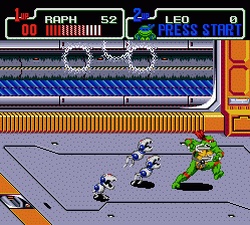
Picture it: April O’Neil is live on Channel 6, and behind her Manhattan starts to squeeze in on itself like a toy city. Cut to Shredder, grinning, his voice dripping with glee: he’s wielding that power from Dimension X—the Hyperstone. It’s an opener that sticks in your head as hard as the TMNT theme sting. And that’s where Teenage Mutant Ninja Turtles: The Hyperstone Heist begins—the very “Return of the Shredder” on some bootlegs, the same goosebump-familiar brawler inside about the Foot Clan, pizza, and a brotherhood led by Splinter.
How it came to be
Early ’90s Konami was on a heater. TMNT arcade cabs were always buzzing, and two-player co‑op pulled friends together faster than a large pepperoni could show up. On the Super NES, Turtles in Time was the talk of the town, and it felt like everyone had their perfect way to save New York. Sega fans, though, were waiting for their story. Konami didn’t just port levels—they spun up a separate take for the Mega Drive. The Hyperstone Heist became Genesis’s verdict on Shredder: a new hook with a Dimension X Hyperstone, a different fight choreography, and that unmistakable arcade pulse that makes your thumbs itch to mash.
Here’s a fun wrinkle: in Japan it shipped as Return of the Shredder. Around our markets, that title often glared from the cart sticker, while we casually called it “The Hyperstone Heist” or simply “the Turtles on Sega.” Those little variations were part of how it came home: stickers, playground retellings, quick tips, and an older brother’s running joke that “Shredder’s messing with Manhattan again.”
Why we loved it
Hyperstone Heist has its own heartbeat. It isn’t just another side‑scrolling beat ’em up—it feels assembled from fan‑favorite TMNT touchstones—sewers, docks, caves, and of course the Technodrome—then delivered with a dense, snappy rhythm. Fights with Foot soldiers and Rock Soldiers pop one after another like a music video, and cutaways with April and Splinter carry the Saturday‑morning cartoon energy we chased after school. You don’t think in genre labels; you ride the arcade rush, when two players on one couch sync up in seconds: slide, grab, toss—pixel sparks flying.
And the sound is pure Genesis: FM‑synth riffs punch in time with your hits, the bassline lurches forward and nudges you into the next scrum. Konami’s artists lavished the spritework with love: Donnie twirls his bo, Raph snaps off sharp sai strikes, Mikey beams, Leo holds the line—and the whole crew breathes New York street life. You dive in because you believe in these heroes, their bond, and the promise that no matter how loud he shouts, Shredder’s getting his comeuppance. That’s the attachment: Hyperstone Heist plays like an exclusive episode of the cartoon, shot just for our 16‑bit cart.
How it spread worldwide—and here at home
Globally, it was “our own thing” on Sega Mega Drive/Genesis: a TMNT with its own arc and a Technodrome finale. Mag columns of the day praised the arcade kick and two‑player co‑op, and that cover art with the green quartet did the heavy lifting in shop windows across the U.S. and Europe. But the real long tail was here in the post‑Soviet scene: on Friday you borrowed a cart from a neighbor, Saturday you co‑oped with your cousin, and Sunday you argued where Shredder hid the next trap. Some carts wore TMNT: The Hyperstone Heist, others the Return of the Shredder badge, but we called it a dozen ways—“Hyperstone Heist,” “Return,” “the Turtles on Sega”—and everyone knew exactly which game you meant.
Pirate kiosks could surprise you: batches with off‑center stickers where Leo smiled a bit too wide, blurbs promising “save Manhattan and defeat the Foot Clan.” Sometimes the seller would nod, “It’s like Turtles in Time, only for Genesis”—and there was a grain of truth. The two are cousins: same Konami arcade DNA, the same heroes, familiar move sets. But Hyperstone Heist walks its own path with different scene direction and level stitching. Maybe that’s why it stuck: you came back not as a replacement but as a parallel timeline—another tale of Shredder and the Foot trying to crush Manhattan, with the turtles answering back with a grin and a loud “Cowabunga!”
Echoes of an era
Think of that cart today and you don’t just hear sounds—you hear the whole room. The plastic of the pads, a parent’s “thirty more minutes till dinner,” those short summer nights spent cleaning up New York block by block. For some, Hyperstone Heist was a first brush with the beat ’em up genre; for others, the definitive childhood co‑op where your brother or best friend was automatically Player 2. That’s the key: Konami handed the Mega Drive not just a game, but a frictionless portal into the Teenage Mutant Ninja Turtles universe—light on solemnity, big on respect for the legend, brisk in tempo, and packed with detail.
And yeah, the names still float—The Hyperstone Heist, Return of the Shredder—but the second Channel 6 flashes on screen, April grabs the mic in a panic, and Shredder unveils his “master plan,” everything else fades. What’s left is pure feeling: your Genesis, your Mega Drive, your TMNT—and a short, punchy rescue of Manhattan where every hit lands like a guitar riff from the soundtrack and every victory feels like a small celebration.